

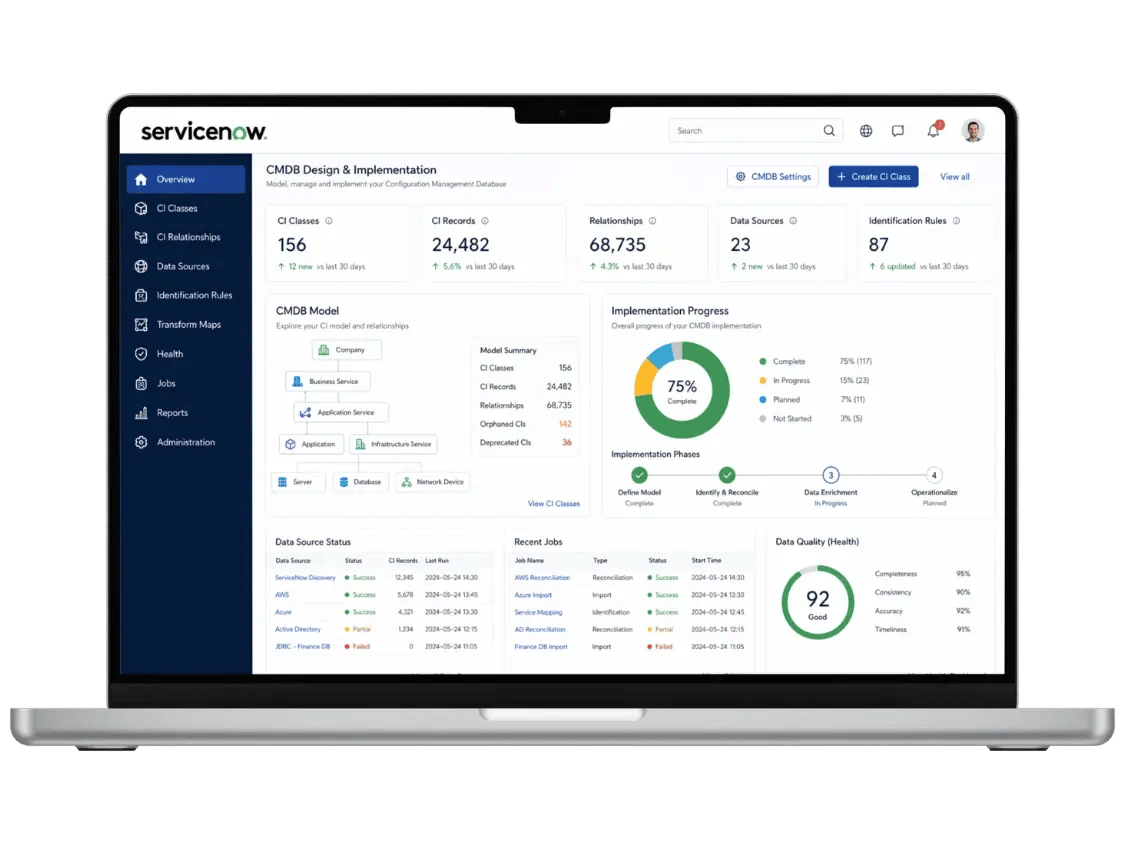

Avoid common implementation failures
Many CMDB implementations fail slowly, not on day one. They pass a go-live and degrade from there.
On a manufacturing estate running several million configuration items (CIs), machinery on the production line was ruled out of scope for the CMDB, on the basis that ServiceNow wasn't used to manage it directly. When a firmware upgrade on one component turned out to be incompatible with another, there was no end-to-end view connecting them, and no named owner to coordinate a rollback once three plants stopped producing.
We see the same design gaps repeatedly:
- Poor CI modelling, so an item is scoped out simply because it isn't directly managed through the platform
- Missing or inaccurate relationships between the CI and what actually depends on it
- Discovery tools configured for the estate the organisation had, not the one it has now. See ServiceNow Discovery
- No named owner, so a rollback or a fix has nobody to coordinate it. See unknown CI owners are driving up IT spend
We address these during design and implementation, not after the first incident finds them. If you're not sure how far yours has drifted, a CMDB health check shows where to start.


Trusted by Organisations Worldwide
.webp?width=144&height=90&name=14%20(1).webp)
.webp?width=144&height=90&name=26%20(1).webp)
.webp?width=144&height=90&name=27%20(1).webp)
.webp?width=144&height=90&name=25%20(1).webp)
.webp?width=144&height=90&name=12%20(1).webp)
.webp?width=144&height=90&name=16%20(1).webp)
.webp?width=144&height=90&name=13%20(1).webp)
.webp?width=144&height=90&name=15%20(1).webp)
.webp?width=144&height=90&name=17%20(1).webp)
.webp?width=144&height=90&name=18%20(1).webp)
.webp?width=144&height=90&name=20%20(1).webp)
.webp?width=144&height=90&name=19%20(1).webp)
.webp?width=144&height=90&name=21%20(1).webp)
.webp?width=144&height=90&name=23%20(1).webp)
.webp?width=144&height=90&name=22%20(1).webp)
.webp?width=144&height=90&name=1%20(1).webp)
.webp?width=144&height=90&name=2%20(1).webp)
.webp?width=144&height=90&name=4%20(1).webp)
.webp?width=144&height=90&name=24%20(1).webp)
.webp?width=144&height=90&name=3%20(1).webp)
.webp?width=144&height=90&name=7%20(2).webp)
.webp?width=144&height=90&name=9%20(2).webp)
.webp?width=144&height=90&name=6%20(2).webp)
.webp?width=144&height=90&name=10%20(3).webp)
.webp?width=144&height=90&name=8%20(3).webp)
.webp?width=144&height=90&name=28%20(1).webp)
.webp?width=144&height=90&name=5%20(2).webp)
.webp?width=144&height=90&name=29%20(1).webp)
.webp?width=144&height=90&name=30%20(1).webp)